




Facade Material Comparison: Which Facade Solution Makes Sense Long-Term in Switzerland?
The choice of facade material not only affects the appearance of a building, but above all determines maintenance effort, upkeep costs, and long-term value retention. Especially under Swiss climate conditions with strong temperature fluctuations, high UV exposure, and moisture, choosing the right facade is a decision with long-term consequences.
Many homeowners and planners face the question: Wood facade or WPC facade – which solution makes sense long-term in Switzerland? An objective comparison shows that it is not first impressions that matter, but rather predictability, aging behavior, and maintenance across the entire life cycle.
Why Choosing a Facade Is a Long-Term Decision
In Switzerland, the building envelope is permanently exposed to weather conditions, UV radiation, precipitation, and freeze–thaw cycles. These influences act on the facade over decades and determine how strongly materials, colors, and surfaces change over time.
What matters, therefore, is not the short-term appearance after installation, but which facade material remains technically stable, economically predictable, and visually coherent over many years.
The comparison between wooden facades and WPC facades provides a well-founded basis for decision-making – for single-family homes as well as multi-family buildings, residential complexes, and renovation projects.

The Key Points at a Glance
- Wood facades offer a natural, vibrant appearance but require regular maintenance.
- WPC facades are dimensionally stable, low-maintenance, and economically predictable over their life cycle.
- Maintenance effort and upkeep costs differ significantly over the service life.
- For larger facade areas and multi-family buildings, planning reliability is a key factor.
Wood Facades – Natural Aesthetics with Ongoing Maintenance Effort
Wood is valued in facade construction for its natural character and material authenticity. Wooden facades are often used on single-family homes or architecturally ambitious projects where a deliberate material effect is desired.
Outdoors, however, wood is permanently exposed to environmental influences. Moisture, UV radiation, and temperature changes affect aging, color development, and surface structure.
Typical characteristics of wooden facades:
- natural greying over time
- visible color changes due to UV exposure
- regular maintenance needs (oiling, staining, inspections)
Without targeted upkeep, the appearance changes noticeably. With consistent maintenance, the service life can be extended, but the ongoing effort should be realistically planned.
Lignum also points out that the durability of wooden facades strongly depends on constructive protection and regular maintenance.
WPC Facades – Technically Stable and Predictable Long-Term
WPC facades (Wood Plastic Composite) follow a different approach than traditional wood solutions. By combining wood fibers with polymer components, facade systems are created that are specifically designed for long-term outdoor use.
WPC facades are characterized by:
- high dimensional stability
- low moisture absorption
- uniform surface structure
- minimal maintenance effort
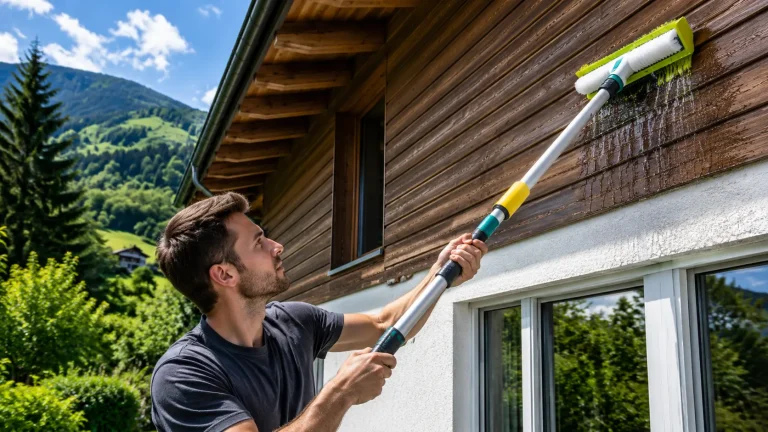
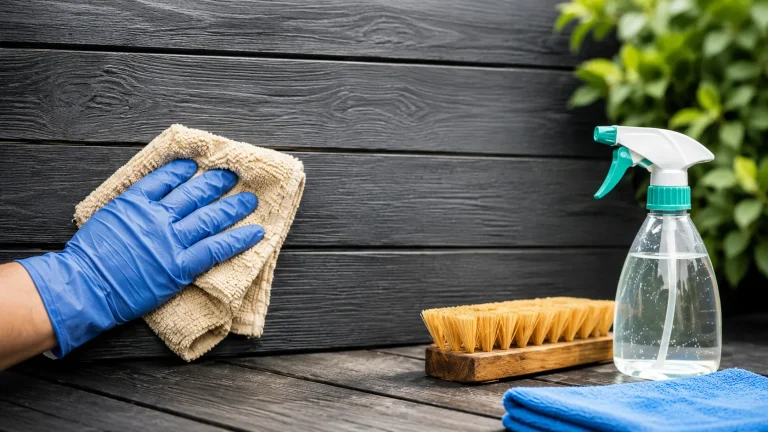
Unlike wood, no regular painting or oiling is required. Cleaning and upkeep are easy to plan, significantly reducing maintenance over many years.

Typical properties of WPC facade systems:
- uniform appearance over a long period
- easy cleaning
- predictable maintenance costs
- minimal color variation during the aging process
Studies by Empa show how important UV resistance, moisture cycles, and temperature stability are for permanently exposed materials – especially in facade construction.
Wood Facade or WPC Facade – Direct Comparison
The following comparison highlights the most important differences between wooden facades and WPC facades under Swiss conditions of use:
| Criterion | Wood Facade | WPC Solution |
|---|---|---|
| Appearance | natural, individual | uniform, modern |
| Maintenance effort | regularly required | low |
| Aging | visible, sometimes uneven | controlled, homogeneous |
| Upkeep | needs ongoing planning | predictable |
| Service life | highly dependent on maintenance | stable with little effort |
| Costs over time | depends on maintenance intensity | predictable |
| Areas of application | single-family homes, design projects | residential buildings, multi-family housing, renovations |
| Installation | depends on wood type and substructure | system-based, easy to plan |
Surface Structure – Impact on Everyday Practicality
In addition to the material itself, surface structure plays a key role in maintenance and everyday practicality. Smooth or finely structured facades are easier to clean, while more strongly profiled surfaces can visually conceal dirt.
These relationships are well known from decking construction:our WPC decking boards and their surface structures clearly show how strongly profiling and geometry influence maintenance effort – a principle that can be directly transferred to facade solutions.
You can find our care tips for WPC decking surfaces in this article.
Sustainability and Life Cycle Assessment
Wood is considered a renewable raw material, but sustainability does not end with the origin of the material. Transport routes, processing, and regular surface treatments significantly affect the overall ecological footprint.
Oils, stains, and paints must be renewed and eventually enter the environment. WPC follows a different approach: thanks to long service life and low maintenance requirements, the use of chemical care products is reduced over the entire life cycle.
From an ecological point of view, it is therefore crucial how often a material needs to be replaced or re-treated – not the material category alone.
A Conscious Decision Within the Overall Concept
The choice between a wood facade and a WPC facade is not a matter of right or wrong, but of usage, willingness to maintain, and long-term project goals.
- Wood is especially suitable where natural aging and architectural freedom are intentionally desired.
- WPC facades offer advantages for projects where a uniform appearance, predictable upkeep, and economic reliability are the priority.
Especially when looking at the entire service life, the economic advantage of WPC facades becomes clear. If maintenance effort, upkeep intervals, and follow-up costs are realistically included, different scenarios can be compared transparently.
Our tip: Early facade consultation in Switzerland helps define the right material precisely for your project.