Wooden Tec sample box – delivered to you for free!
Test our most popular colours and finishes on site – touch, compare, combine. Find your style – simple, free and without obligation.

The choice of facade material not only affects the appearance of a building, but above all determines maintenance effort, upkeep costs, and long-term value retention. Especially under Swiss climate conditions with strong temperature fluctuations, high UV exposure, and moisture, choosing the right facade is a decision with long-term consequences.
Many homeowners and planners face the question: Wood facade or WPC facade – which solution makes sense long-term in Switzerland? An objective comparison shows that it is not first impressions that matter, but rather predictability, aging behavior, and maintenance across the entire life cycle.
In Switzerland, the building envelope is permanently exposed to weather conditions, UV radiation, precipitation, and freeze–thaw cycles. These influences act on the facade over decades and determine how strongly materials, colors, and surfaces change over time.
What matters, therefore, is not the short-term appearance after installation, but which facade material remains technically stable, economically predictable, and visually coherent over many years.
The comparison between wooden facades and WPC facades provides a well-founded basis for decision-making – for single-family homes as well as multi-family buildings, residential complexes, and renovation projects.

Wood is valued in facade construction for its natural character and material authenticity. Wooden facades are often used on single-family homes or architecturally ambitious projects where a deliberate material effect is desired.
Outdoors, however, wood is permanently exposed to environmental influences. Moisture, UV radiation, and temperature changes affect aging, color development, and surface structure.
Typical characteristics of wooden facades:
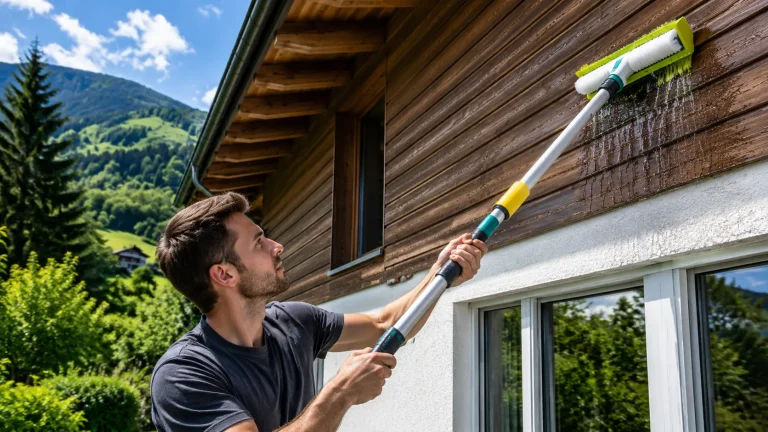
Without targeted upkeep, the appearance changes noticeably. With consistent maintenance, the service life can be extended, but the ongoing effort should be realistically planned.
Lignum also points out that the durability of wooden facades strongly depends on constructive protection and regular maintenance.
WPC facades (Wood Plastic Composite) follow a different approach than traditional wood solutions. By combining wood fibers with polymer components, facade systems are created that are specifically designed for long-term outdoor use.
WPC facades are characterized by:
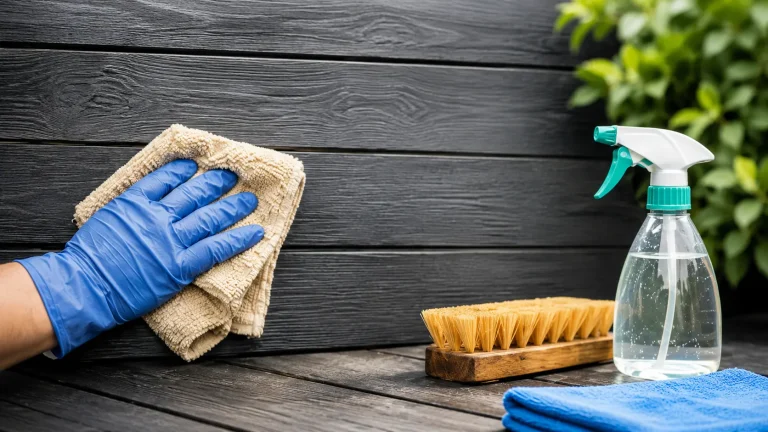
Unlike wood, no regular painting or oiling is required. Cleaning and upkeep are easy to plan, significantly reducing maintenance over many years.

Studies by Empa show how important UV resistance, moisture cycles, and temperature stability are for permanently exposed materials – especially in facade construction.
The following comparison highlights the most important differences between wooden facades and WPC facades under Swiss conditions of use:
| Criterion | Wood Facade | WPC Solution |
|---|---|---|
| Appearance | natural, individual | uniform, modern |
| Maintenance effort | regularly required | low |
| Aging | visible, sometimes uneven | controlled, homogeneous |
| Upkeep | needs ongoing planning | predictable |
| Service life | highly dependent on maintenance | stable with little effort |
| Costs over time | depends on maintenance intensity | predictable |
| Areas of application | single-family homes, design projects | residential buildings, multi-family housing, renovations |
| Installation | depends on wood type and substructure | system-based, easy to plan |
In addition to the material itself, surface structure plays a key role in maintenance and everyday practicality. Smooth or finely structured facades are easier to clean, while more strongly profiled surfaces can visually conceal dirt.
These relationships are well known from decking construction:our WPC decking boards and their surface structures clearly show how strongly profiling and geometry influence maintenance effort – a principle that can be directly transferred to facade solutions.
You can find our care tips for WPC decking surfaces in this article.
Wood is considered a renewable raw material, but sustainability does not end with the origin of the material. Transport routes, processing, and regular surface treatments significantly affect the overall ecological footprint.
Oils, stains, and paints must be renewed and eventually enter the environment. WPC follows a different approach: thanks to long service life and low maintenance requirements, the use of chemical care products is reduced over the entire life cycle.
From an ecological point of view, it is therefore crucial how often a material needs to be replaced or re-treated – not the material category alone.
The choice between a wood facade and a WPC facade is not a matter of right or wrong, but of usage, willingness to maintain, and long-term project goals.
Especially when looking at the entire service life, the economic advantage of WPC facades becomes clear. If maintenance effort, upkeep intervals, and follow-up costs are realistically included, different scenarios can be compared transparently.
Our tip: Early facade consultation in Switzerland helps define the right material precisely for your project.

Both materials are suitable. Wood appears lively and natural, while WPC supports calm, clean facade designs with long-term consistency.
Mainly for multi-family buildings, residential complexes, and renovations with large facade areas.
The decision depends on the project goals: wood for a natural look, WPC for predictable upkeep and long-term planning reliability.
Learn more: Discover our WPC facade solutions for Switzerland.
Wood ages visibly and develops a natural patina. WPC changes in a controlled and uniform way with minimal color variation.
A central one. Usage, maintenance effort, budget, architecture, and service life should be considered together at an early stage.